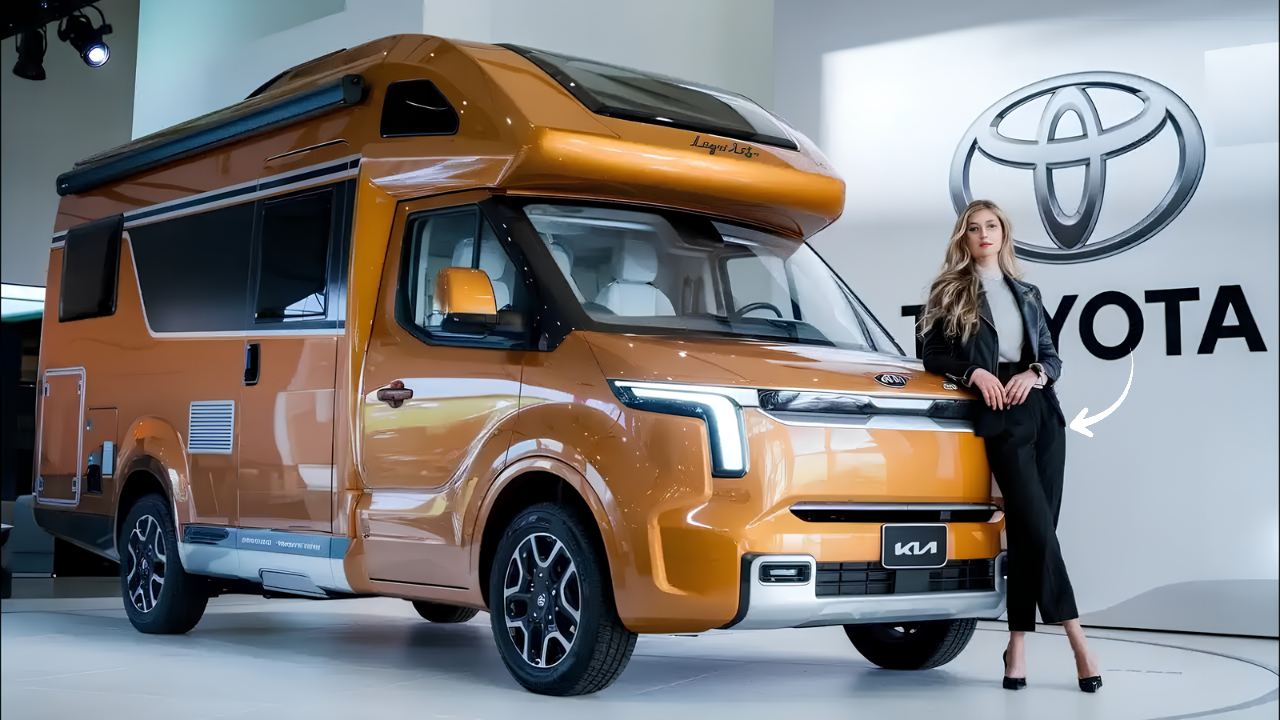
2026 Kia Camper Van : Kia has become one of the most interesting names in the 2026 camper-van conversation. While the brand does not yet sell its electric PV5 van in the United States, the growing number of camper conversions built around it—and the debut of the larger PV7—has made American outdoor travelers pay close attention.
The appeal is simple: a modern electric van with flexible space, clever design, and the potential to become a compact home on wheels.
For U.S. buyers, however, the story is still more about possibility than availability. Kia has not confirmed an American release for either the PV5 or PV7, and import costs remain a major obstacle.
Still, the momentum behind these vehicles suggests that Kia is seriously thinking about how electric vans could reshape the camper market.
A New Kind of Adventure Vehicle
The 2026 camper-van discussion is no longer limited to traditional gas-powered conversions. Kia’s PV5 has emerged as a popular base for compact electric campers because its boxy, practical shape offers usable interior volume without feeling oversized on the road.
Several conversion companies have already shown how the van can be turned into a sleeping, cooking, and travel setup. What makes the PV5 appealing is not just its electric powertrain. It is the way Kia designed the vehicle around flexibility.
The van’s flat floor, tall roofline, and modular layout give converters room to add beds, storage, kitchen units, and power systems without making the vehicle feel cramped. That matters for weekend travelers who want comfort without stepping up to a full-size RV.
The PV5 also represents a shift in how people think about camping. Instead of treating a van as merely transportation, Kia and its conversion partners see it as a movable living space.
A driver can commute during the week, then head toward a trailhead, lake, or national forest on Friday evening with a bed, basic kitchen gear, and electrical power already on board.
The PV5 Camper Conversions
One of the most talked-about PV5-based concepts is the LightCamp, developed by Vantrack. It takes the electric van and adds a practical camper layout designed for people who want a simple, lightweight travel setup.
The idea is not to overload the vehicle with heavy RV equipment, but to create enough comfort for short trips, outdoor weekends, and flexible road travel.
Another example is the iCamper conversion from Wellhouse. This version shows how a compact electric van can support a more complete camper experience, including sleeping arrangements and everyday living features.
The completed iCamper demonstrates that the PV5 platform can handle more than a basic sleeping setup; it can become a genuinely usable small camper for travelers who value efficiency and modern design.
These conversions are important because they prove a point: camper vans do not need to be huge to be useful. A smaller electric van can work well for couples, solo travelers, or families making shorter trips. It can also be easier to park, drive, and charge than a traditional motorhome.
Why Electric Camper Vans Matter
Electric camper vans bring both advantages and challenges. On the positive side, they can offer quiet travel, smooth acceleration, and the ability to use onboard battery power for lights, small appliances, and charging devices.
For campers who prefer dispersed camping or overnight stops away from crowded RV parks, that quiet operation can make a noticeable difference.
The main concern is range and charging access. A camper van needs enough energy not only to drive but also to support life at camp. Heating, cooking, refrigeration, and device charging can all draw power. That is why conversion companies are paying close attention to battery capacity, efficient appliances, and practical charging plans.
Still, the interest in PV5-based campers shows that buyers are willing to consider electric travel if the design feels practical. Kia’s approach appears focused on making the van adaptable rather than forcing every owner into one fixed camper layout.
That flexibility could become one of the brand’s biggest strengths if these vehicles eventually reach the U.S. market.worldwide.
The PV7 Changes the Picture
Kia’s PV7 could make the camper-van idea even more compelling. Revealed at IAA Transportation 2026 in Hanover, Germany, the PV7 is larger than the PV5 and offers more room for camper equipment, storage, and interior comfort.
For travelers who find the PV5 too compact for longer trips, the PV7 may be the more natural choice.
The PV7 is part of Kia’s broader Platform Beyond Vehicle, or PBV, strategy. Rather than building one rigid vehicle type, Kia is developing vans that can serve commercial, passenger, and lifestyle purposes.
That approach opens the door to many configurations, including camper-oriented versions with more space for beds, kitchens, bathrooms, and gear.
Kia has indicated that the PV7 lineup could eventually include a wide range of variants. While that does not guarantee a factory-built camper, it suggests the company sees strong potential in customized and specialty versions of its vans.
For the camper market, that could mean more polished conversions and better-designed travel setups in the future.worldwide.
The U.S. Availability Question
Despite the excitement, American buyers should remain cautious. Kia has not announced U.S. availability for the PV5 or PV7. Reports consistently note that the PV5 remains unavailable to U.S. customers, even though the vehicle has generated strong interest among camper enthusiasts and conversion companies.
One major issue is the import tariff on certain commercial vehicles. Because the PV5 is built in South Korea and classified as a commercial van, it can face a 25 percent U.S. import tariff commonly associated with light trucks and commercial vans. That cost makes it difficult for Kia to bring the vehicle to America at a competitive position.
Local production could change that equation. If Kia were able to build a suitable van in the United States, it could avoid some of the import-related cost pressure.
However, no such production plan has been confirmed for the PV5 or PV7, so U.S. buyers should treat current camper-conversion news as encouraging but not definitive.
What It Means for American Campers
For now, the most realistic takeaway is that Kia’s camper-van movement is influencing the market even before its vans arrive in the United States.
American companies are already exploring compact camper ideas, including pop-up roof systems for the Kia Carnival, showing that interest in smaller, more efficient adventure vehicles remains strong.
The PV5 and PV7 also put pressure on established camper-van makers to rethink interior space, electrification, and modular design. Buyers increasingly want vehicles that can handle daily driving, weekend trips, and longer journeys without requiring a separate RV. Kia’s platform-based approach fits that expectation well.
If Kia eventually brings one of these vans to the U.S., it could introduce a more accessible entry point into the electric camper-van world.
Until then, the 2026 news is best viewed as a preview of where the market may be heading: smaller, smarter, electric, and designed around flexible living rather than bulky traditional RV layouts.
Final Thoughts 2026 Kia Camper Van
The 2026 Kia camper-van story is compelling because it combines practical design with a clear vision for electric travel.
The PV5 has already inspired creative conversions, while the larger PV7 could support more comfortable long-distance camper setups. Both vehicles show that Kia understands the growing demand for adaptable adventure vehicles.
For U.S. travelers, patience is still necessary. There is no confirmed American launch, and tariff-related challenges remain significant. But the interest surrounding Kia’s vans suggests that the company is watching the camper market closely.
Also Read this – Oppo 5G Smartphone come in 250MP Camera under ₹10,999, Battery is 7800mAH
If the right version reaches the United States with the right conversion support, it could become one of the most exciting new options for modern road-trip camping.